Urbanity: Inequality, Adaptation and Urban Space in the Historical Perspective is an interdisciplinary project funded by the Johannes Amos Comenius Programme under the call Social Sciences and Humanities: Man and Humanity in the Global Challenges of Today.
The Urbanity project aims to understand key issues in the development of urban space in the Czech context from the Middle Ages to the present day. By combining historical, sociological, anthropological and geoinformation research, it seeks to offer new perspectives on the complex issues of urban inequality, adaptability to crises and the transformation of public space.
The project draws chiefly on the concept of the “history of the present”, which allows for the exploration of the historical causes and contexts of current challenges, such as climate change, migration, inequality and conflicts related to urban space. The project arises from the assumption that a deeper understanding of the past may provide us with practical models for equitable and inclusive planning of urban space in contemporary democratic society.
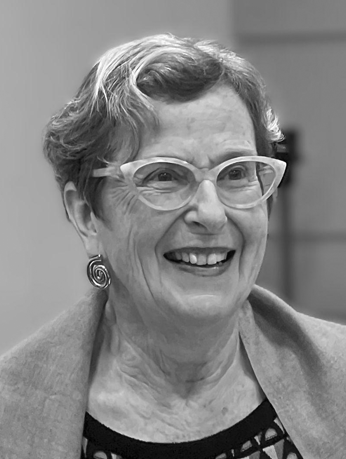
Sandrine Kott is emerita Professor of Contemporary European History at the University of Geneva and Global distinguished Professor at New York University. She specializes in labour history and social policy, including housing policy, in Western and Eastern Europe. In addition to over 130 scholarly articles, she has published eight monographs and edited over twenty edited collections. She founded and leads the research platform History of International Organizations Network (HION).
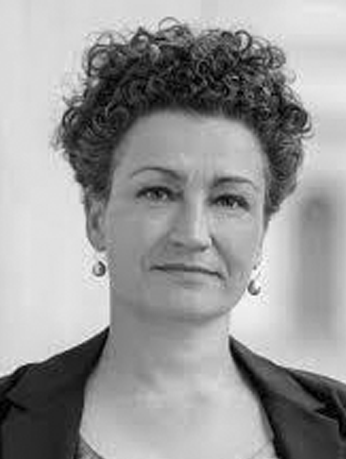
Rubina Raja is Professor of Classical Archaeology and Art at Aarhus University and directed the Centre for Urban Network Evolutions (UrbNet) between 2015 and 2025. She is a world-leading expert in urban and landscape archaeology, specializing in the visual cultures of the ancient Mediterranean and the Near East and social networks from the Hellenistic period to the Middle Ages.
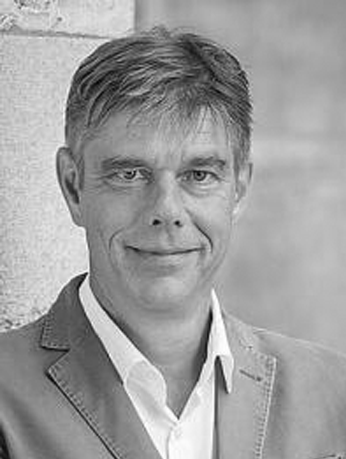
Philipp Ther is Professor of East Central European History at the University of Vienna, where he founded and still directs the Research Center for the History of Transformations (RECET). He specializes in the comparative social and cultural history of Central Europe in the 19th and 20th centuries, with a particular focus on nationalism, migration, music, and history of transformation(s) since the 1980s. In 2019 he was awarded the Wittgenstein Prize by the Austrian Research Fund, the highest recognition for scientists in Austria.
Florian Urban is professor of architectural history and Head of History of Architecture and Urban Studies (HAUS) at the Glasgow School of Art. His research interests include the relationship between urbanism and architecture and political, social and cultural influences, the architecture mass housing, and the history of postmodern architecture under socialism. His book Tower and Slab: A Global History of Mass Housing (Routledge 2012) won the Book Prize of the International Planning History Society (IPHS). His book Form Follows Fuel – 14 Buildings from Antiquity to the Oil Age (Routledge 2026, co-authored with Barnabas Calder), looks at embodied and operational energy in historic buildings.
Oliver Ibert is Professor of Economic Geography, Director of the Leibniz Institute for Research on Society and Space (IRS) since 2019, and Professor of Socio-Spatial Transformation at Brandenburg University of Technology Cottbus-Senftenberg. His research topics include creative processes from a spatial perspective, knowledge practices, temporary organizations, geographies of value creation, online communities, crisis response practices and regional development policies.
The Urbanity project is structured around three main research work packages covering the complex issues of urban development, its historical roots and contemporary challenges. These research work packages were framed so as to complement one another and create synergies across interdisciplinary research work.
1. Urban public space – A place of creativity and conflict
The aim of this research work package is to explore public space as a crucial indicator of social change, creativity and conflict. Its goal is to gain an understanding of the historical and current dynamics influencing public space, as well as to propose a possible democratic and inclusive transformation for this public space.
Historical analysis
Map development of public spaces from the Middle Ages to the present, with emphasis on their political, social and symbolic roles.
Democratization potential
Explore public space as a potential platform for democratization processes, social integration and citizen participation.
Creativity and conflicts
Identify the role of public space in encouraging creativity and as a place where social conflicts take place and are resolved.
Participatory planning
Propose models of participatory planning for city administrations reflecting historical and current findings.
2. The city as a place of inequality
Within this research work package, the expert team will analyse social and spatial inequalities in cities in both the historical and the current context. The aim is to gain an understanding of the roots of these inequalities, as well as of their impact on the everyday lives of people and on urban planning.
The historical roots of inequalities
Analyse how historical processes (such as industrialization, migration and urbanization) shaped inequalities in the urban public space.
Social stratification
Explore how social and economic differences are reflected in the spatial organization of cities.
Visualization of data
Use geoinformation technology to visualize spatial inequalities and identify inequality “hot spots”.
Intervention
Formulate recommendations for the mitigation of inequalities by targeted urban planning and public policies.
3. Urban threats and resilience
The aim of this research work package is to explore the way cities adapted historically to threats and crises (e.g. climate, social and political crises) and identify tried and tested strategies which could be used to strengthen the resilience of contemporary cities.
Historical adaptations
Study historical reactions of cities to threats such as epidemics, natural disasters and war.
Modern resilience
Propose strategies based on historical knowledge for coping with current crises, such as climate change, migration and urban planning problems.
Role of urban public space
Explore the way urban public spaces contribute to building the resilience of cities and communities.
Promotion of sustainability
Elaborate practical models to ensure long-term sustainability and urban resilience.
Project objectives
In the long-term, the project has the potential to strengthen the position of Czech science internationally, and also to offer specific models and recommendations for solving current problems of urban life. Its results may be used to inform public policies focused on inclusivity, sustainability and democratization of urban public space.
The Urbanity project’s key objectives are as follows:
1. Implementation of research work packages
The project focuses on three main research areas (urban public space, inequality, and threats and resilience), the results of which will be published in expert studies. These research work packages will contribute to deeper understanding of the dynamics in the development of Czech cities and offer practical recommendations for the administration of urban public space.
2. Building of an excellent research team
The project involves more than 45 experts across different fields and institutions. Each research work package brings together expert researchers with international experience, junior researchers and students. This leads to interdisciplinary and intergenerational cooperation.
3. Internationalization of Czech urban historiography
The project seeks to establish intensive cooperation with foreign research institutions and researchers. This cooperation includes joint conferences, workshops, the exchange of knowledge, the involvement of foreign researchers and the submission of international grant applications.
4. Popularization of research results
The project emphasizes the effective communication of research results to a broader public through publications, lectures, interactive workshops and cooperation with city administrations. In this way it aims to promote participatory urban planning and increase awareness of the importance of historical context in the current urban public space.
5. Modernization of the research infrastructure
The project includes the purchase of high-end technological equipment, such as handheld laser scanners and graphic work stations, which will enable a detailed 3D digitalization of urban localities and the analysis of historical structures.
6. Establishing a postgraduate urban planning programme
In cooperation with all institutions involved, plans have been made to establish a new postgraduate programme focusing on urban interdisciplinary research. This will allow for the training of a new generation of expert researchers in this field.
Partners
The project is being carried out in cooperation with three institutions: the Institute for Contemporary History of the Czech Academy of Sciences, the Faculty of Arts of Palacký University in Olomouc, and the Institute of Philosophy of the Czech Academy of Sciences. These institutions bring together researchers from various fields, ensuring an interdisciplinary approach and the highest quality of research.